
The word PATE refers to a dish made from many types of meat, but has one cooking principle: the meat or liver that forms the base of this dish is not just finely chopped or passed through a meat grinder, but also rubbed through a sieve. This word usually means a thin paste made from various ingredients - game, meat, liver, fish, mushrooms, vegetables, nuts. Pates differ not only in the type of main ingredient but also in the method of serving: pates are hot and cold. Hot pates are usually served in small baskets made of crumbly or puff pastry, which, together with the precious contents, are heated in the oven before serving.
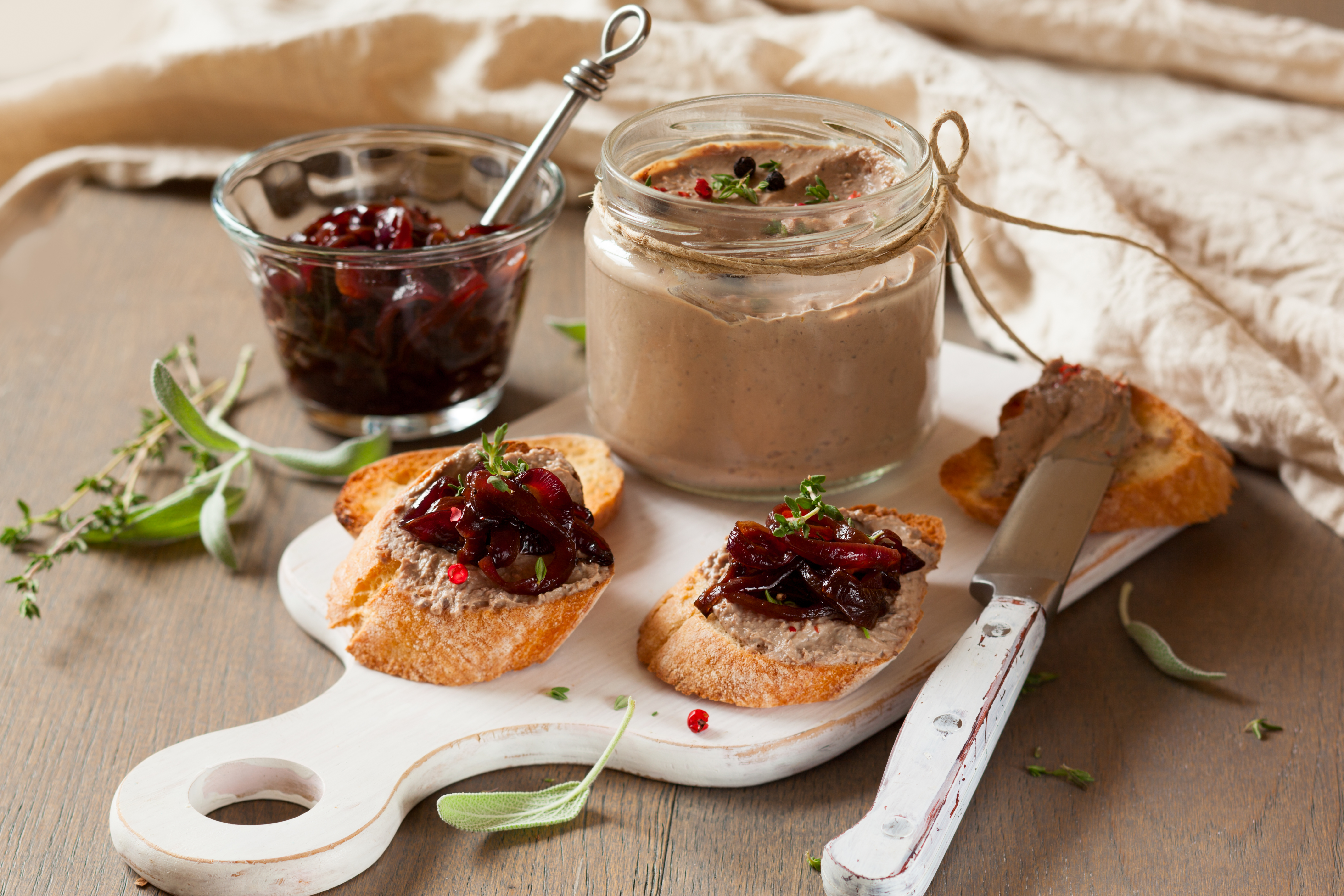
Cold pate can be served very creatively. This type of pate can be placed on a porcelain plate, sliced and garnished with herbs. It can also be laid out in thin petals in a pastry basket, adding small pieces of fresh or marinated vegetables and sprigs of parsley and dill to this masterpiece. Or you can spread it on bread and eat it with appetite, serving with strong sweet tea.
In France, pates are differentiated by the method of preparation and are called by two different words: pâté and terrine. Pâté is, actually, pate in the classic sense. The modern word pâté comes from the old French pâstée, which meant pie. Initially, it was prepared from puff pastry with filling of finely chopped meat, fish, or poultry. Over time, the pastry shell disappeared, and the filling became known as pate and acquired an independent meaning in culinary.
Terrine is a clay bowl with a lid. Previously, meat and fish had been stored in such bowls, then they began to bake pate made from them, which received the name terrine. As a rule, this type of pate is served cold.
A very special type of pate is made from foie gras - the liver of an overfed goose or duck. There are many ways to prepare this dish – for example, foie gras terrine marinated in cognac, madeira, or sauternes. The aesthetic option is foie gras with black truffles.
Pate is a rather caloric dish, which, with skillful and careful use, can bring considerable benefits to the person eating it. First of all, like any delicious food, pate brings pleasure and, therefore, helps the body get rid of the harmful effects of stress, restore fragile mental balance and find – at least for five minutes – harmony with oneself and the world around. But seriously, the basis of most pates is liver-a very valuable by-product, a rich source of vitamin A, B vitamins, essential amino acids. Pate is a rather fatty dish (sometimes the fat content exceeds 30%), and those who are prone to obesity or are predisposed to atherosclerosis, as well as diseases of the digestive and cardiovascular system should be careful about this. On the other hand, scientists have found that fat helps the immune system fight pathogens, which is especially important during winter and off-season. Maybe that's why at this time it's so tempting to eat something like pate.
Our unusual PATE recipes can be found here
Chicken liver pate with cranberry jelly
Chicken liver pate