

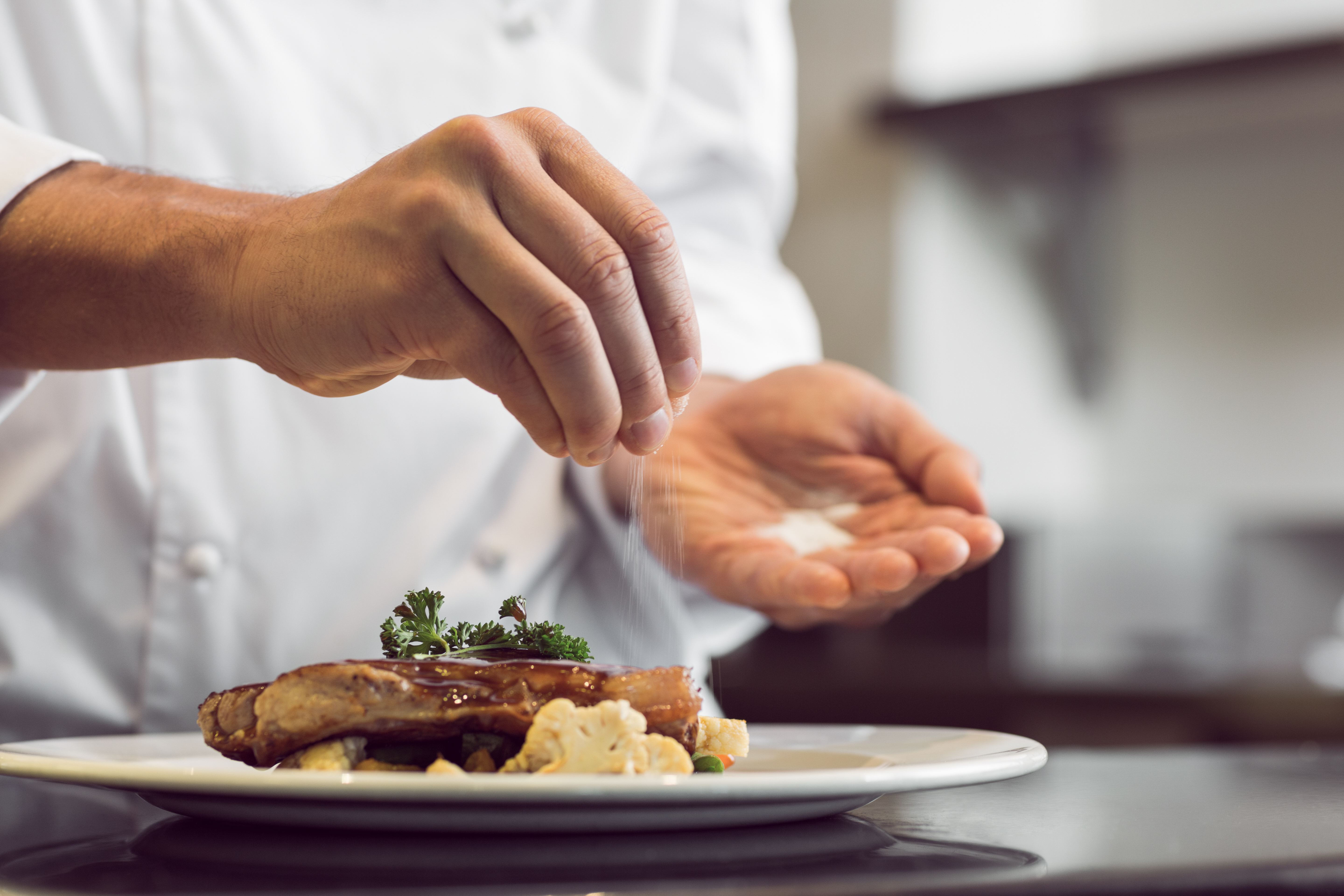
As known, each person has their own culinary preferences, so we offer only approximate data: meat for frying and baking - about 1/2 tablespoon of salt per kilogram; roasts — 1 teaspoon per 1 kilogram; cutlets – 1 teaspoon per 1 kilogram of minced meat; fish – about 3 teaspoons of salt per 1 kilogram; yeast dough – 2 pinches per 1 kilogram; butter-based puff pastry – 1/2 teaspoon per 1 kilogram; buckwheat porridge - 2 pinches of salt per 250 grams of grains; rice – 1 level teaspoon per 250 grams of grains; potatoes – about ½ tablespoon per 1 kilogram; boiled vegetables – about 10 grams per 4 servings; soups – about 1 teaspoon per 1 liter; pasta – 1 teaspoon per 1 liter of water; pelmeni, dumplings – ½ teaspoon per 1 liter of water. An important warning: not all salt is equally salty, meaning the NaCl content in evaporated, rock, and sea salt is different. The highest content is in evaporated salt - therefore, to get the desired taste of dishes, this salt can be used in smaller amounts. In sea salt, conversely, there is less sodium chloride, so a slight exceeding of the norm is permissible. And what if we oversalted? Here are two ways to save oversalted dishes: · add products that will absorb excess salt; · use the oversalted ingredient for preparing another unsalted or bland dish. For example, an oversalted broth can be saved by adding a whole potato or onion, which should be boiled for a few more minutes. If the porridge is oversalted, cook a new unsalted portion, then mix them. Oversalted meat can be used as filling for pies with unsalted dough. Oversalted cutlets can be stewed with raw cut unsalted vegetables or potatoes.



